Dubai has some of the best weather in the world for outdoor living, especially in the evenings and the cooler months. It’s no surprise that rooftops have become one of the most valuable spaces a home or restaurant can have.
A rooftop is no longer just a flat space with a view. With the right design, it can become a private garden, an outdoor lounge, or a stunning dining spot that people remember long after they leave. But turning a bare rooftop into something usable and beautiful takes more than just adding a few chairs and plants. It involves real planning around safety, weather, drainage, and design, all at the same time.
This is exactly where a proper rooftop design and renovation service makes the difference between a rooftop that looks good in photos and one that actually works well for years.
Explore our Renovation & Remodeling Service in Dubai, UAE
Why Rooftop Spaces Need Their Own Kind of Design
A rooftop faces conditions that a regular indoor space never has to deal with. It’s exposed to direct sun, wind, rain, and, in Dubai’s case, a lot of heat for most of the year. Materials that work perfectly indoors can crack, fade, or warp outdoors within months if they’re not chosen with this in mind.
There’s also the structural side to think about. Rooftops have weight limits, drainage requirements, and safety regulations that have to be respected, especially when adding features like planters, flooring, or seating areas. A design that ignores these details might look fine on day one, but can cause real problems later, from water pooling to safety hazards.
This is why rooftop design works best when it’s treated as its own specialty, not just an extension of indoor interior design.
What Goes Into a Good Rooftop Design
A well-planned rooftop renovation usually brings together several elements that all need to work together rather than being added one by one.
- Railing and safety features. Since rooftops are elevated spaces, proper railing is one of the first things to plan, both for safety and as a design feature in its own right. Glass railings, for example, keep the view open while still meeting safety needs.
- Flooring. Outdoor-rated decking, tiles, or composite flooring need to handle sun exposure, rain, and foot traffic without cracking or fading over time. The right flooring choice also affects how the whole space feels underfoot.
- Landscape and greenery. Planters, small gardens, or even a turfed corner can soften a rooftop and make it feel less like a concrete slab and more like an outdoor retreat. Plant choices need to suit rooftop conditions, including wind and heat.
- Lighting. Good rooftop lighting does two jobs at once. It creates an atmosphere for evenings, and it keeps the space safe to walk around once the sun goes down. Layered lighting, like string lights above and subtle path lighting below, usually works better than one bright overhead source.
- Shade and shelter. Pergolas, shade sails, or retractable canopies help make a rooftop usable even during the hottest parts of the day, extending how much the space actually gets used.
- Seating and decor. Outdoor furniture, cushions, and decor pieces tie the whole space together and should be chosen for durability as much as style, since they’re exposed to the elements far more than indoor furniture.
When all of these pieces are planned together from the start, the rooftop ends up feeling like one connected space rather than a collection of separate additions.
Designing for Different Types of Rooftops
Not every rooftop project has the same goals, and the design approach should reflect that.
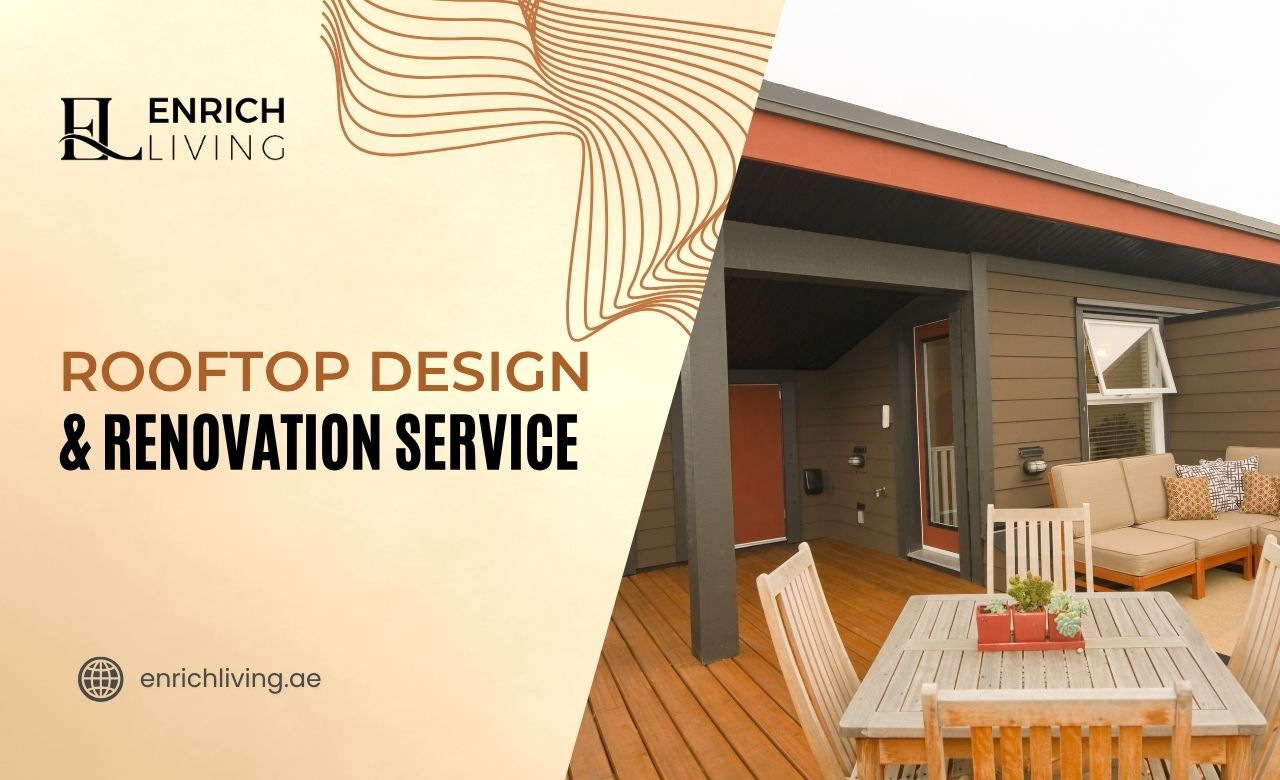
House rooftops are usually about creating a private retreat for the family. Think comfortable seating, some greenery, maybe a small dining corner, and good lighting for relaxed evenings at home. Privacy from neighboring buildings often becomes an important part of the layout, too.
Rooftop restaurants and cafes have a different set of priorities. Here, the design has to support a smooth flow for guests and staff, comfortable seating for long dining experiences, weather protection for year-round use, and lighting that creates the right mood without being too dim for guests to read a menu. Branding and atmosphere matter just as much as practicality, since the rooftop itself becomes part of the restaurant’s appeal.
Rooftop lounges and event spaces often need more flexible layouts, since the space might host a quiet evening one night and a private event the next. Movable furniture, strong lighting control, and durable flooring that can handle higher foot traffic all become important here.
In each case, the same core elements apply: railing, flooring, lighting, and shade, but how they’re arranged depends entirely on how the space will actually be used.
Choosing Materials That Can Handle Dubai’s Climate
Material choice makes or breaks a rooftop project in this climate. Direct sun and heat for most of the year, combined with the occasional heavy rain, mean everything on a rooftop needs to be chosen with durability in mind, not just appearance.
Natural stone and porcelain tiles tend to handle heat well and stay cool enough underfoot compared to darker materials that absorb the sun all day. Composite decking is a popular alternative to real wood, since it gives a similar warm look without the cracking, fading, and maintenance that timber needs outdoors. For railings, tempered glass and powder-coated metal hold up far better than untreated materials, which can corrode or discolor over time. Fabric choices for cushions, canopies, and shade sails also matter, since outdoor-rated, UV-resistant fabric will last years longer than regular indoor fabric exposed to the sun.
Getting these choices right at the planning stage saves a lot of money later, since replacing faded or damaged materials after just one summer is far more expensive than choosing the right ones from the start.
Common Mistakes to Avoid on a Rooftop Project
A few avoidable mistakes tend to show up again and again on rooftop projects.
- Skipping proper drainage planning. Without the right slope and drainage points, water can pool after rain and slowly damage flooring or the structure underneath.
- Choosing indoor materials for an outdoor space. Furniture, fabric, or finishes meant for indoor use rarely survive long-term exposure to sun and weather.
- Underestimating wind exposure. Taller buildings can experience strong wind at the rooftop level, which affects everything from plant choice to how furniture and shade structures need to be anchored.
- Ignoring weight limits. Adding heavy planters, water features, or structures without checking what the rooftop can safely support is a serious safety risk.
- Treating lighting as decoration only. Lighting also needs to support safe movement around the space at night, not just look attractive in photos.
Benefits of Investing in a Well-Designed Rooftop
A properly planned rooftop adds real value beyond just an attractive space to relax in.
- It increases the usable living or business area of a property, often turning unused space into one of its most popular spots.
- For restaurants and cafes, a well-designed rooftop can become a major draw on its own, attracting guests specifically for the experience.
- Durable, climate-appropriate materials reduce long-term maintenance and replacement costs.
- A thoughtfully planned rooftop can boost property value, since outdoor living space is highly desirable in Dubai’s market.
From Planning to Execution
One of the biggest challenges with rooftop projects is that they involve several different trades working together. Structural checks, waterproofing, railing installation, flooring, landscaping, electrical work for lighting, and final decoration all need to happen in the right order, in a space that often has limited access compared to a regular construction site.
Handling this with a single team that manages the whole process, from the first concept and site assessment through to material selection, installation, and final styling, helps avoid the delays and miscommunication that happen when multiple separate contractors are involved.
It also means the design vision created at the start actually makes it through to the finished rooftop, rather than getting lost somewhere in the construction process.
Let’s Transform Your Rooftop
If you’re dreaming of a private rooftop retreat at home, or planning a rooftop restaurant or lounge that guests won’t forget, the right team can take that idea from a rough sketch to a finished space.
Enrich Living offers our experience in interior design services in Dubai, UAE, to handle rooftop projects from planning through to execution, including railing, flooring, landscaping, lighting, and final decoration.
Reach out to Enrich Living today to discuss your rooftop project and start turning that space above your home or restaurant into one of its best features.